
- November 4, 2021
- Posted by: admin
- Category: Articles
What is a fork and how does it affect the price of a cryptocurrency?
In the beginning there was Bitcoin, which was developed as a decentralized digital alternative to cash. Over time, more specialized currencies such as Ripple and Monero have emerged. These new cryptocurrencies did not appear just like that, many arose as a result of a fork. In its broadest sense, a fork is simply a change in the blockchain protocol that software uses to decide if a transaction is valid or not. This means that almost any discrepancy in the blockchain can be considered a fork.
When forks arise?
Forks occur when a user base or developers decide that something fundamental needs to be changed in a cryptocurrency. This could be due to a major hack, as in the case of Ethereum, or to a fundamental disagreement within the community, as we saw with Bitcoin and Bitcoin Cash.
Fork types
There are two main types of forks: soft and hard forks.
What is a soft fork?
A soft fork is any change that is backward compatible. When a soft fork occurs, old nodes (computers that connect to the cryptocurrency network) will still recognize new transactions as valid. However, any mined blocks will be considered invalid upgraded nodes. To be successful, soft forks require most of the hash power of the network. Otherwise, they risk being the smallest chain and losing the network, in fact, turning into a “hard fork”.
What is a hard fork?
A hard fork is any change that breaks backward compatibility. Nodes running old software will treat any new transactions as invalid. This means that in order to obtain new “valid” chains, they will need to be updated. If a large enough percentage of the community decides they want to continue using the old rules, then the chain will split, resulting in two separate currencies.
Hard forks require consensus
A hard fork requires majority support (or consensus) from coin holders connected to the coin network. To apply a hard fork on a sufficient number of nodes, it is necessary to update the protocol software to the latest version. This allows them to leverage the new coin and blockchain. Any nodes that choose not to upgrade will not be able to use the new blockchain. If enough users don’t update, you won’t be able to get a clean update, which could break the blockchain. There are several ways to ensure that there is a consensus before fully activating an update.
Soft forks via miner-activated updates
Softforks sometimes use miner-activated updates where the hashpower of a new protocol must be equal to a certain percentage before the update is accepted. Dash uses its masternodes to make major changes to the blockchain protocol.
How a fork affects the crypto community
Forks can be devastating to the community. There are often competing views on the future of cryptocurrency, and this can lead traders and miners to feel that they have no choice but to go their separate ways. Bitcoin forks to Bitcoin Cash, for example, preparations for the Bitcoin and Bitcoin Cash split came after a series of increasingly venomous community debates. There is still a lot of animosity between the now fractured communities, especially regarding Bitcoin Cash’s claims that Satoshi is the “true vision” of Bitcoin. On the other hand, sometimes this level of destruction can be enough to prevent a fork from occurring. Controversial SegWit 2 fork.X was abandoned in 2017 because its proponents “currently have not reached sufficient consensus to update the net block size.”. The plan has been postponed due to fears that the update could lead to another hard fork and further destabilize Bitcoin.
Official repair site Asic for mining cryptocurrencies in Russia.
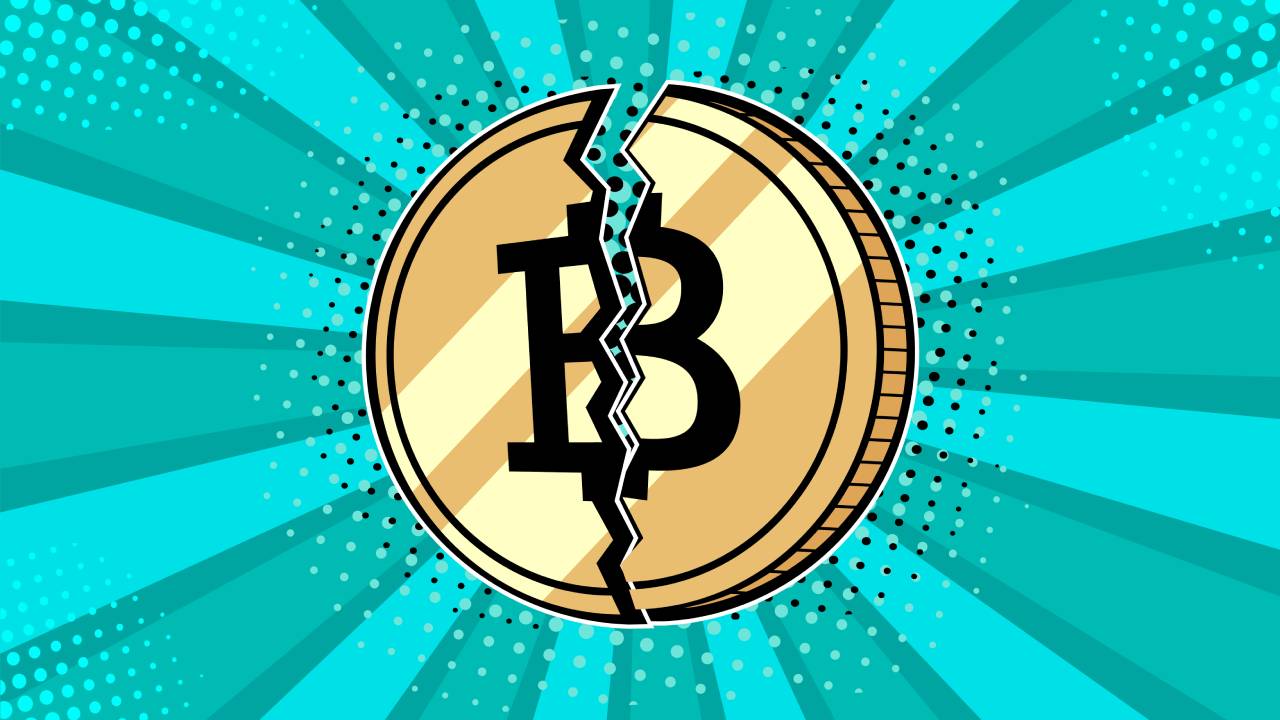
What impact can a hard fork have?
Hard forks can have a profound impact on cryptocurrencies, and not only because of the uncertainty that has arisen. Bitcoin Cash hard fork is a good example of a possible quirk. Holders of the “parent” cryptocurrency receive an equal number of forked coins. For example, if you had 10 Bitcoin during the Bitcoin Cash fork, you would have 10 Bitcoin Cash. This can lead to really interesting waves in the market.
Fork and influence of large traders
Large traders or whales can cause big waves in the market. Whales are usually large organizations that own hundreds of thousands of Bitcoin. This is enough for their decisions to strongly influence the direction of the market. Some large private traders or dolphins also have enough stocks to influence the market to some extent.
Fork and the impact of blockchain cloning
Here is an example of a theoretical edge case where the entire blockchain is cloned. Let’s imagine that the manager of one of these whales knows that a fork is about to happen, and as a result, they will receive one new coin for each original coin they hold. This gives them a strong incentive to increase their stake in the parent token. So they start buying every token they can find. Their sheer size means they can artificially raise the price of their mother’s currency ahead of a fork, as whales and dolphins buy up whatever they can find. They’ll do it until the night of the split. Whales are rewarded with new tokens in a one-to-one ratio. Since the whales know that the price of the parent company was inflated by their actions, they continue to dump both the new token and the parent token on every exchange. This can lead to a drop in the value of both the forked and parent token. Over time, their value will begin to stabilize as traders use their profits to buy more cryptocurrencies.
Not every fork leads to free cryptocurrency
The above example also applies to sections where the entire blockchain is cloned. Many forks only copy the base code, so no duplicates are created when fixing a new coin. In these cases, traders act a little differently. Depending on the circumstances surrounding the fork, you can see traders ditch the old coin in favor of “safer” rates until they decide the market has stabilized. You can also see traders largely ditch the original cryptocurrency in favor of a new fork, as happened with Ethereum and Ethereum Classic (with the former far superior to the latter).
Is it worth trading a cryptocurrency before a hard fork??
Hardfork marks an unstable time for cryptocurrency. The community is often divided on this issue, and the market tends to be very volatile, even by cryptocurrency standards. How you react will largely depend on your currency rate and the type of fork you are looking at. Will you be able to sell the product before the whales do?? In the case of a hard fork, when you will receive a “free” currency, it makes sense to keep your currency or even increase your supply of coins. The downside to this is that other large traders do the same. If you are concerned that you will not be able to react quickly enough to a pre-whale sale, you might be better advised to sell your coins just before the fork. You will lose “free” currency, but you may be able to profit from whales looking to increase their share. You can then use that to buy a large stake after the inevitable crash.
Sell before soft fork
If you’re looking at a soft fork, your choice will be a little easier. If you think a fork will help a currency, one of the possible actions is to obtain currency from interested users, taking advantage of price fluctuations to increase your rate. If you think that the fork will have a bad effect on the currency, then it is recommended to sell it before the crash. Remember there is a chance that the currency will split if the community is not behind the fork.
It’s important to understand that forks are the natural way blockchains evolve, and there will be more in the future.